Making Democracy Work: Strengthening Institutions, Engaging Communities, Empowering Citizens
Regional Summits on Issues that Matter
Tuesday, September 15, 2026 | 8:00 a.m. - 3:30 p.m. | Ware Center

Thank you for attending! Over 175 participants engaged in a great day of supporting democracy.
Event Details:
Millersville University will host its 6th Annual Sustainable Development Goals (SDG) Conference on Tuesday, September 15, 2026, focusing on "Peace, Justice and Strong Institutions". This one-day conference will take place at The Ware Center in downtown Lancaster, PA from 8:00 am to 3:30 pm, bringing together policymakers, community leaders and advocates, agency heads and staff, and educators to address one of today's most pressing social challenges.
The conference aims to facilitate meaningful dialogue on innovative solutions, best practices, and resource sharing to promote peace, justice, and community safety in alignment with the UN's Sustainable Development Goals, particularly SDG 16: Peace, Justice, and Strong Institutions.
The day-long event will include:
- Demystify election administration by bringing county-level officials and state election experts into direct conversation with educators, community leaders, and citizens — grounding the day in how democratic systems actually work, not rhetoric about how they should work.
- Feature nonpartisan, practitioner-led sessions that focus on system design, structural challenges, and institutional resilience — avoiding partisan talking points and instead equipping attendees with knowledge they can apply in their communities.
- Provide educators with classroom-ready civics resources and strategies developed in partnership with organizations like the Pennsylvania Council for the Social Studies and local school districts.
- Showcase sustainable journalism models — such as Spotlight PA and Votebeat — alongside traditional local outlets to demonstrate how communities can rebuild information infrastructure even as legacy media declines.
- Create space for student voices through a dedicated student panel where high school and university students share their perspectives on civic education and democratic engagement, ensuring the day addresses the next generation's needs and questions.
- Facilitate cross-sector dialogue among policymakers, journalists, educators, election officials, legal experts, and civic organizations — building the relationships and shared understanding necessary for collaborative problem-solving.
- Distribute takeaway resources including policy briefs, curriculum materials, and contact lists for ongoing partnerships — ensuring the conference's impact extends well beyond September 2026.
This event is hosted by the Office of Community Engagement, Governmental, and Economic Development (CEGED), the Millersville University School of Social Work, and the Center for Civic Engagement.
Sustainable Development Goals
In 2015, at the United Nations Headquarters in New York, 193 world leaders committed to the 17 Sustainable Development Goals (SDGs). These are a series of ambitious objectives and targets to address poverty and hunger, fight inequality and injustice, and tackle climate change, by 2030.
A few years into the aggressive agenda, there is evidence of progress across the private and nonprofit sectors, and within federal, state, and local governments. Civil society is translating this shared vision into plans and strategies. The Sustainable Development Goals are the blueprint for achieving a better and more sustainable future for all.
Millersville University’s Link to United Nations Sustainable Development Goals
Millersville University has adopted the UN SDGs as an action item in our 2025 Strategic Plan – “Tradition and Transformation.” By 2025, we seek to expand curricular and co-curricular experiences that support Sustainable Development Goals. We also recognize our public mission to enhance the economic and social well-being of our region by advancing knowledge transfer and best practices. Hosting annual conferences of practitioners, policy leaders, and community advocates to support a shared understanding of the SDGs and accelerate the adoption of best practices aligns with our public mission and our strategic goals.
Learn more about the conference by contacting the Office of Community Engagement, Governmental and Economic Development at 717-871-5955 or Victor.Desantis@millersville.edu.
-
Program Schedule
8:00 am: Doors Open for Registration & Light Breakfast
8:30 am: Welcome/Introduction (ATRIUM)
- Victor DeSantis, PhD – Vice President for University Relations and Strategic Initiatives
- Daniel Wubah, PhD – University President
8:45 – 9:15 am: Morning Keynote Address (ATRIUM)
Democracy's Crossroads: Challenges, Strengths, and Pathways Forward
- Amy Widestrom, PhD - Executive Director, League of Women Voters of Pennsylvania
9:15 – 9:50 am: Morning Tribute (ATRIUM)
Celebrating Public Service: Why Public Servants Matter to Democracy
Moderator: Dr. Karen Halfhide - School of Social Work, Millersville University
Featuring:
- Dr. Amber Martin - County Treasurer, County of Lancaster
- Rep. Nikki Rivera - State Representative, 96th Legislative District
- Rep. Bryan Cutler - State Representative, 100th Legislative District
Description:
This session honors the dedicated elected officials who serve at every level of government — from state representatives to county leaders to municipal and school board officials — and explores why their work is essential to community vitality and democratic function. Our speakers will discuss their pathways to public service, the rewards of serving their communities at the local and state levels, and why the next generation should consider careers in public administration and civic leadership.
10:00 - 10:50 am: Morning Breakout Sessions - Part 1
Session A: Truth and Accountability: Political Communication and What Citizens Expect (ATRIUM)
Moderator: Dr. Laura Granruth - Associate Professor, School of Social Work, and Director, Center for Civic Engagement, Millersville University
Presenter:
- Dr. Robert Spicer - Associate Professor of Communication and Theater, Millersville University
Description:
Pennsylvanians of all ages are navigating a political landscape filled with competing narratives, misinformation, and strategic deception—much of it on social media platforms. This panel explores what citizens across generations expect from political leaders and institutions around truthfulness and accountability. Robert Spicer provides context on the challenges facing effective, truthful political communication in the modern media environment and offers insights on how political leaders can build trust through honest engagement.
Session B: Drawing the Line: Fair Districts, Gerrymandering, and Responsive Representation (BINNS ROOM)
Description:
Gerrymandering—the deliberate manipulation of electoral district boundaries—is a longstanding practice in American politics with significant effects on representation and electoral outcomes. This session examines how district boundaries are drawn, the mechanisms and strategies of gerrymandering, and how redistricting practices shape political representation across different communities. Fair Districts PA explores Pennsylvania's redistricting landscape, recent developments in fair districts advocacy, and the various approaches being considered to address concerns about district equity.
Moderator: Christopher J. Schutlz, DPA, Acting Vice Chancellor, Kean Ocean
Speaker:
Carol Kuniholm, Co-Founder and Chair of Fair Districts, PA
11:00 - 11:50 pm: Morning Breakout Sessions - Part 2
Session A: Student Voices: What Does Democracy Look Like From Here? (BINNS ROOM)
Moderator: Kat Gastineau - Councilor, City of Lancaster; Member, Governor's Advisory Commission on Next Generation Engagement
Panelists:
- Danielle Lutz - student, Hempfield High School
- Tommy Titus - student and Civic Engagement Fellow, Millersville University
- Sevan Sinton - student and Editor of the Snapper, Millersville University
Description:
A student panel featuring high school and college students presenting their perspectives on civic education and democratic engagement. Students will share what's working in civics education, what feels disconnected from their lived experience, and what they want to know about how democracy functions.
Session B: Covering Democracy: How Local Journalists Keep Communities Informed (ATRIUM)
Moderator: Mary Dolheimer - Senior Director of Public Relations, Millersville University
Panelists:
- Colby Itkowitz - Journalist, formerly with the Washington Post; Board Member, Lancaster County Local Journalism Fund
- Jan Murphy - Director of Government Affairs at Pennsylvania NewsMedia Association; former Capitol Reporter at The Patriot-News/PennLive.com
- Joanna Zuckerman Bernstein - Deputy Director, Spotlight PA
Description:
A panel discussion addressing the structural challenge of diminished local news coverage. The panel — featuring local print/digital journalists, nonprofit newsroom representatives and journalism educators — will discuss coverage triage strategies, new models (nonprofit, collaborative journalism), and the civic consequences of news deserts.
12:00 - 12:50 pm - Afternoon Keynote Address: Constitutional Foundations for Democracy: Why the Constitution Matters Today (ATRIUM)
- Julie Silverbrook - Chief Content and Learning Officer, National Constitution Center
Description:
The Constitution does more than establish the structure of American government. It creates the framework through which a diverse nation governs itself, divides and limits power, protects individual freedoms, and provides institutions for navigating disagreement. This conversation will explore the constitutional foundations beneath many of the ideas discussed throughout the day, from elections and separation of powers to an independent judiciary and freedom of speech and the press. As America enters the Civic Decade, the years leading to the Constitution’s 250th anniversary in 2037 and the Bill of Rights’ in 2041, it will also consider why understanding and sustaining these constitutional foundations matters for the future of American democracy.
1:00 - 1:50 pm - Afternoon Breakout Sessions - Part 1
Session A: Elections Drive Democracy: Election Administration, Security, and Access (BINNS ROOM)
Moderator: Carolyn Hernandez, President, League of Women Voters Lancaster County
Panelists:
- Jonathan Marks - Deputy Secretary for Elections and Commissions, PA Department of State
- Ray D'Agostino - Commissioner, Lancaster County
Description:
Elections are the foundation of democracy—this session features county and state election leaders discussing what it takes to administer secure, accessible, and trusted elections in Pennsylvania. Speakers explore election safety measures, strategies for encouraging voter participation, and how election officials at the county and state levels work together to strengthen democracy. The conversation emphasizes why professional, dedicated election administration is essential to democratic health and how communities can support elections that truly serve democracy.
Session B: Civic Engagement Beyond Voting: Building Social Capital (ATRIUM)
Moderator: Matt Johnson, Church World Services
Panelists:
- Stephen Medvic, PhD - The Honorable & Mrs. John C. Kunkel Professor of Government and Director, Center for Politics and Public Affairs, Franklin & Marshall College
- Bill Madway - Co-Chair, Braver Angels Pennsylvania
- Dave Wagner - Co-Chair, Braver Angels Pennsylvania
Description:
Moving beyond voter participation to explore how communities can create spaces for deliberative democracy and civil dialogue. Speakers examine how structured conversations and civil discourse enable citizens and policymakers to engage meaningfully on complex policy issues and bridge ideological divides.
2:00 - 2:50 pm - Afternoon Breakout Sessions - Part 2
Session A: Teaching Democracy in a Polarized Classroom (ATRIUM)
Moderator:
Dr. Robert Spicer, Associate Professor, Department of Communication and Theater
Panelists:
- Dr. Nivedita Bagchi - Professor, Department of Government, Law, and International Relations, Millersville University
- Jonah Farber - Lead Teacher in Social Studies Department, Columbia Borough High School
- Brian Booker - Teaching and Learning Consultant – Social Studies, Lancaster-Lebanon Intermediate Unit 13
Description:
An education focused session designed so educators at all levels leave with strategies and classroom-ready resources they can implement immediately. The session will feature teachers sharing successful approaches, explore curriculum resources and provide networking opportunities for civics educators across the region. Addresses the real challenge of teaching controversial civic topics in a way that builds critical thinking without advocacy.
Session B: The Courts as Democratic Guardrails: Understanding the Role of an Independent Judiciary (BINNS ROOM)
Moderator: Lea Zikmund, Exec Director, Hourglass
Panelists:
- Hon. Lawrence Stengel - former United States Distict Judge; United States District Court for the Eastern District of Pennsylvania
- John J. Hare - Attorney, Marshall Dennehey; Member, Supreme Court of Pennsylvania Historical Commission and the Commission on Judicial Independence
Description:
The session will walk through Pennsylvania's retention election model, recent major court rulings on election laws and redistricting, and why an independent judiciary matters for democratic stability. Focuses on structural and institutional questions rather than specific case outcomes.
3:00 - 3:30 pm - Closing Session / Networking with Conference Partners
-
Program Bios
Learn more about your speakers for September 15, 2026Keynote Speakers:
Amy Widestrom, PhD - Executive Director, League of Women Voters of Pennsylvania

Amy Widestrom holds a B.A. in Theater and English from Oberlin College and an M.A. and Ph.D. in Political Science from Syracuse University. Her scholarship and teaching focused on American politics, with an emphasis on civic engagement and voting behavior, public policy, campaigns and elections, and the role of women in politics. Prior to joining the League, Amy served as a faculty member and Chair of the Department of Historical and Political Studies at Arcadia University. Her professional background also includes roles in the nonprofit sector, at the Brookings Institution, and with the U.S. Senate Committee on Banking, Housing, and Urban Affairs. She brings this experience to her work leading the League's civic engagement, advocacy, and voter education programs and initiatives across the Commonwealth.
Julie Silverbrook - Chief Content and Learning Officer, National Constitution Center
 Julie Silverbrook is Chief Content and Learning Officer at the National Constitution Center, where she leads the strategy, development, and delivery of the Center’s content, public programs, and educational initiatives in service of its mission of nonpartisan constitutional education and civil dialogue. A leading advocate for civic education and constitutional literacy, she writes and lectures on civic learning, the Constitution, and its history, and regularly moderates the Center’s podcasts and public programs. Prior to joining the Center, Silverbrook served as Senior Director of Partnerships and Constitutional Scholar-In-Residence at iCivics and as Executive Director of the Constitutional Sources Project (ConSource). She holds a JD from William & Mary Law School and graduated summa cum laude, Phi Beta Kappa, from The George Washington University with a BA in political science.
Panelists:
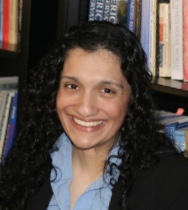 Dr. Nivedita Bagchi - Professor, Department of Government, Law, and International Relations, Millersville University
Nivedita Bagchi, Ph.D. (University of Virginia) is a political theorist who teaches for the Department of Government, Law, and International Relations, for the Women, Gender, and Sexuality Studies minor, and serves as the Coordinator of the minor in International Studies. Her courses include Introduction to Political Theory, American Political Thought, Political Theory through Fiction and Film, Introduction to Women, Gender, and Sexuality Studies, and Women and American Politics. Her research agenda focuses on political theory as understood through fiction. She has published Human Nature and Politics in Utopian and Anti-Utopian Fiction as well as book chapters in textbooks on American Government and on Aldous Huxley’s Brave New World.
 Brian Booker - Teaching and Learning Consultant – Social Studies, Lancaster-Lebanon Intermediate Unit 13
As a Curriculum and Instruction Specialist at IU13, Brian brings years of experience as a middle school social studies teacher. His focus is on research-based strategies to increase student engagement, critical thinking, collaboration, and creativity in the social studies classroom. He is passionate about how the intersections of different social studies disciplines allow students to have a better understanding of themselves, the past, and the world around them. Brian’s focus areas include: (1) Curriculum, Instruction, and Assessment Design and Development, (2) Best Practices in Social Studies Education, (3) Instructional Coaching, (4) Gifted Education Network and Services, and (5) Project and Inquiry Based Learning. He holds a B.S. in Social Studies Education from Elizabethtown College, a M.Ed. in Educational Leadership from Edinboro University and a M.Ed. in Instructional Media with a STEM endorsement from Wilkes University.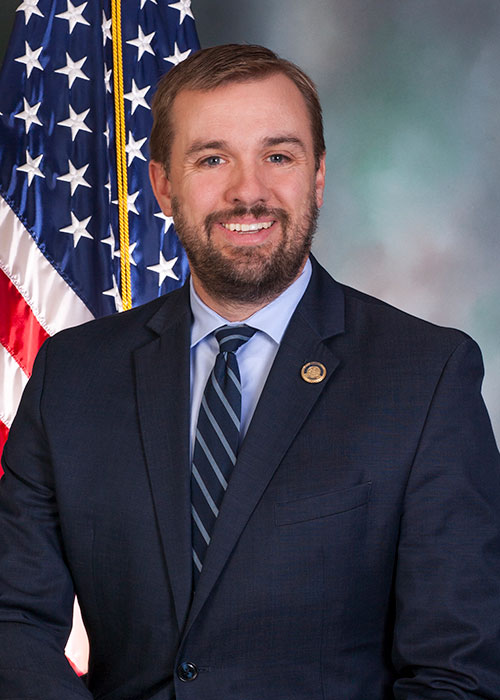 Rep. Bryan Cutler - State Representative, 100th Legislative District
Serving his tenth term in Pennsylvania General Assembly, Bryan Cutler represents the 100th Legislative District in Lancaster County. In June 2020, he was elected by his colleagues to serve as the 139th Speaker of the House, having previously serving as the Majority Leader. He was re-elected Speaker on January 5, 2021. Rep. Cutler became Minority Leader for the 2023-24 session. For the 2025-26 session, he served as the Republican chairman of the House Education committee. While in office, Bryan has worked on welfare reform efforts and issues related to health care. He received a Health Care Management Degree from Lebanon Valley College and a Law Degree from Widener Law School. He is a member of the Lancaster Bar Association, and practices law with the firm of Nikolaus & Hohenadel.
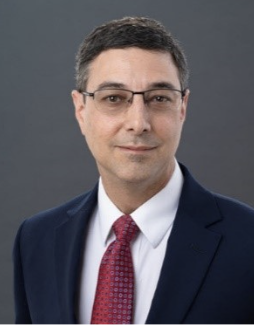 Ray D'Agostino - Commissioner, Lancaster County
Ray D’Agostino was first elected as a Lancaster County Commissioner in 2019 and then re-elected in 2023. He currently serves as chairman of the Board of Commissioners, chairman of the County Board of Elections and County Metropolitan Planning Organization. Before being elected he served for ten years as CEO of the Lancaster Housing Opportunity Partnership (LHOP). Ray spent nearly 20 years in local government leadership as a municipal and authority manager and instructor. He also served as the first Chief of Staff for former State Senator Lloyd Smucker (now Congressman). A retired veteran of the U.S. military, Ray served a combined 22 years in the U.S. Navy Reserve (Seabees) and PA Army National Guard. He holds Master of Public Administration (MPA) and Bachelor of Science in Education degrees from Shippensburg University.
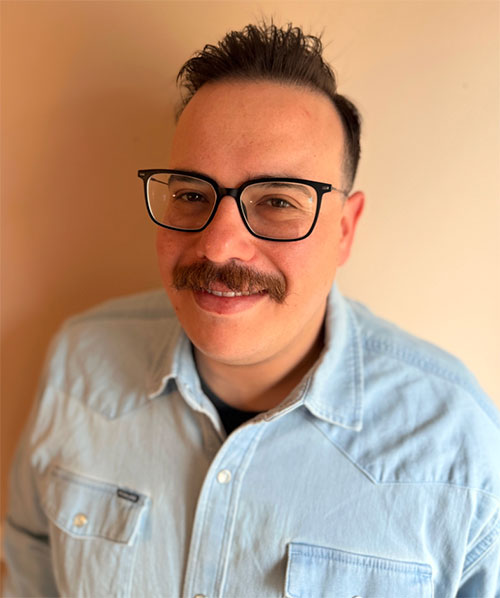 Jonah Farber - Lead Teacher in Social Studies Department, Columbia Borough High School
Jonah Farber brings 9 years of experience in teaching high school social studies and is the lead teacher for the social studies department at Columbia Borough High School within the Columbia Borough School District. He currently teaches AP Government, Honors World History, College and Career, and folk lore and legends, encouraging his students to think critically about the issues of the day and express their opinions through various discussions and debates. In his role as lead teacher, he oversees the social studies department fostering curriculum development and directs the social studies department in collaborative thought and productive discussions. Jonah is an alumni of Millersville University of Pennsylvania with an Undergraduate Degree in Secondary Education, Social Studies. He later earned his Masters Degree in Instructional Technology from Bloomsburg University.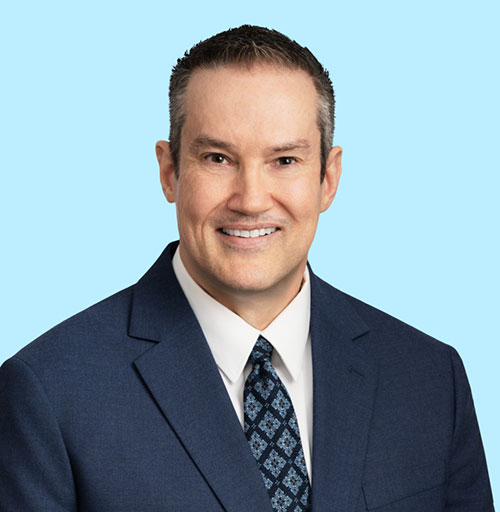 John J. Hare - Attorney, Marshall Dennehey; Member, Supreme Court of Pennsylvania Historical Commission and the Commission on Judicial Independence
John is a member of Marshall Dennehey P.C.'s three-person Executive Committee, which is responsible for the firm’s daily operations and management of more than 500 attorneys across 19 offices in seven states. He also serves as chair of the Firm’s seventeen-attorney Post-Trial and Appellate Advocacy Practice Group. As appellate counsel, John has litigated more than 500 appeals in state and federal appellate courts, representing individuals, corporations, and insurers in many of Pennsylvania’s highest-profile civil appeals.
John is actively involved in the Pennsylvania legal community. He has edited and co-authored two books on Pennsylvania appellate courts. The Supreme Court of Pennsylvania; Life and Law in the Commonwealth, 1684-2017, was published by the Pennsylvania State University Press in 2018. Keystone of Justice: The Pennsylvania Superior Court, 1895-1995, was published by the Commonwealth of Pennsylvania in 2000. He also serves by appointment of the Supreme Court of Pennsylvania as the co-chair of the Court’s Historical Commission and on the Commission on Judicial Independence. He is a Fellow of the American Academy of Appellate Lawyers, an invitation-only group of America’s top 500 appellate lawyers, and he spent six years on the Pennsylvania Supreme Court’s Civil Procedural Rules Committee, the last two years as chair. He serves on the advisory board of Ohlbaum on the Pennsylvania Rules of Evidence (Lexis-Nexis), regularly speaks at appellate court events and continuing legal education seminars, and previously served on the Board of Governors of the Bar Association of the Third Federal Circuit and as co-chair of the Amicus Curiae Committee of the Pennsylvania Defense Institute.Carol Kuniholm - co-founder and chair of Fair Districts, PA
Carol Kuniholm is co-founder and chair of Fair Districts PA, a non-partisan, all-volunteer coalition working on redistricting reform in Pennsylvania. She was vice president of government and social policy for the League of Women Voters of Pennsylvania when she helped launch FDPA as a fiscal project of LWVPA, and has helped build the group into a stateside grassroots movement with supporters in every legislative districts in PA. Since the start of the coalition in January, 2016 she has presented information on gerrymandering to audiences across the state and on local and national radio and TV. Kuniholm received a PhD in American literature from the University of Pennsylvania, taught literature and writing at the college level and served for over a decade as Director of Ministry to Youth and their Families at the Church of the Good Samaritan in Paoli. That experience, working with youth in a broad mix of school districts in the Philadelphia suburbs as well as in some of Philadelphia's poorest neighborhoods, led her to investigate questions of inequity and dysfunction in the PA legislative process, and continues to energize her work for a redistricting process and state legislature that serves all of Pennsylvania well.
Danielle Lutz - student, Hempfield High School

Danielle Lutz is a current senior at Hempfield High School and the President of the Model UN. She is interested in policy and lawmaking and is pursuing a Fall Internship with the League of Women’s Voters. Danielle has been very passionate about student involvement in politics and community and hopes to bring more opportunities for civic involvement to her fellow students. Upon graduation, she intends to pursue a double major in Biology and Political Science to pursue a career in public health.
Bill Madway - State Co-Coordinator, Braver Angels PA
Bill Madway is the co-leader of the Pennsylvania program of Braver Angels. In this role, he develops training programs for alliance leaders, while achieving membership, partnership, and marketing and public relations goals. Bill has over 30 years of marketing experience in corporate, entrepreneurial, political, nonprofit, and academic settings. He currently serves on the Board of Directors of Committee of 70, the Board of Trustees of Beth David Reform Congregation, the Editorial Board of Social Marketing Quarterly; and the Advisory Board of George Washington University’s Graduate School of Political Management, where he earned a Master’s in Strategic Public Relations. He also has an MBA from The Wharton School.
Stephen Medvic, PhD - The Honorable & Mrs. John C. Kunkel Professor of Government and Director, Center for Politics and Public Affairs, Franklin & Marshall College
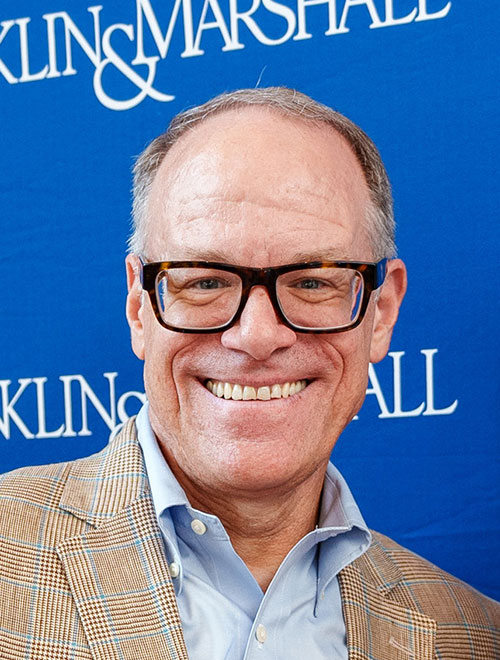 Stephen K. Medvic is The Honorable and Mrs. John C. Kunkel Professor of Government at Franklin & Marshall College. He also serves as the Director of F&M’s Center for Politics and Public Affairs. Dr. Medvic received his Ph.D. in political science from Purdue University and taught at Old Dominion University in Virginia before joining the faculty at Franklin & Marshall in 2002. His research and teaching interests include campaigns and elections, political parties, the media and politics, public opinion, and democratic innovation. He has written numerous academic articles and book chapters, and is the author or editor of eight books including Gerrymandering: The Politics of Redistricting in the United States (2021, Polity Press), Are All Politics Nationalized? Evidence from the 2020 Pennsylvania Campaigns, co-edited with Matthew M. Schousen and Berwood A. Yost (2023, Temple University Press), and Campaigns and Elections: Players and Processes (5th edition, 2026, Routledge). Dr. Medvic provides frequent political analysis for the media and his commentary has been used by, among others, NBC Nightly News, CNN, The Washington Post, The Philadelphia Inquirer, Fox News Online and the NewsHour on PBS.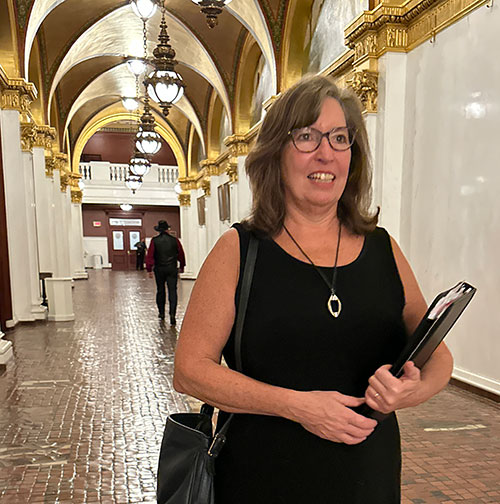
Jan Murphy - Director of Government Affairs at Pennsylvania NewsMedia Association; former Capitol Reporter at The Patriot-News/PennLive.com
Jan Murphy is Director of Government Affairs for the Pennsylvania NewsMedia Association, where she advocates for the news media industry at the Pennsylvania Capitol. In this role, she champions First Amendment protections, government transparency, accountability and accessibility, as well as the preservation of strong local journalism. Before joining the association, Jan spent more than four decades in journalism, including over 20 years covering state government from the Capitol newsroom for PennLive. Throughout her career, she earned numerous journalism awards and accolades for her work. In 2024, she was inducted into the Pennsylvania NewsMedia Association’s Hall of Fame in recognition of her lasting contributions to journalism and the news media industry.

Sevan Sinton - student and Editor of the Snapper, Millersville University
Sevan Sinton is a senior Journalism major at Millersville University currently serving as the Editor-in-Chief at The Snapper. Sevan has spent over three years finding and writing stories that have uplifted voices from Millersville University’s student body, its faculty, and the surrounding Lancaster County community. Sevan’s work includes investigative reporting, geopolitical pieces, and campus event recaps. Sevan has been inducted into the Alpha Epsilon Rho Honor Society, which recognizes student achievements in producing electronic media.
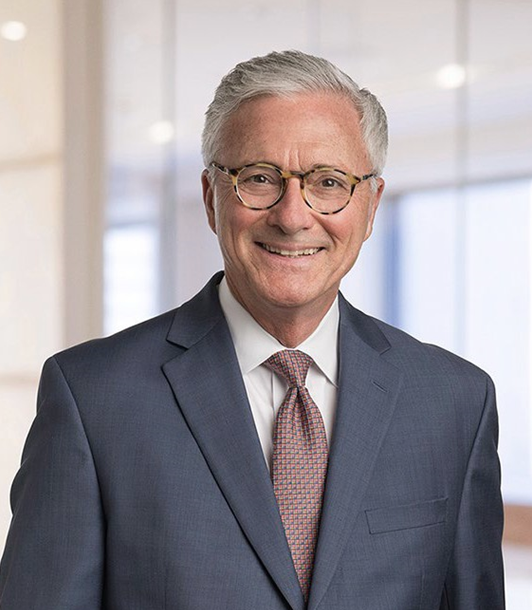 Hon. Lawrence Stengel - former United States Distict Judge; United States District Court for the Eastern District of Pennsylvania
 Judge Stengel served as a judge for nearly three decades and has presided over a breadth of criminal and civil trials, both jury and non-jury. He has extensive experience in deciding matters involving corporate governance, civil rights violations, discrimination and compliance with federal and state regulations. Hon. Lawrence F. Stengel (Ret.), former Chief Judge for the United States District Court for the Eastern District of Pennsylvania, is now a shareholder at Saxton & Stump and focuses his practice on investigations and criminal defense, arbitrations and mediations, monitorships and receiverships. As a member of the firm’s Investigations, White Collar and Criminal Defense practice, Judge Stengel works with a team of attorneys who conduct fair and thorough internal investigations for corporations, educational institutions, governmental agencies, municipalities and other organizations across the country. He is also a member of the firm’s Attorney and Judicial Ethics and Discipline practice.
Judge Stengel received a Bachelor of Arts from Saint Joseph’s University in 1974 and his J.D. from the University of Pittsburgh School of Law in 1980 where he served on the Law Review. Early in his career, from 1980 to 1984, he was in private practice in Pittsburgh with Dickie, McCamey, and Chilcote, P.C. He then began his own practice in Lancaster with his father, Lawrence E. Stengel, from 1985 until 1990. He was a teacher at Lancaster Catholic High School from 1974 until 1977 and has served as an adjunct professor at Millersville University, Franklin and Marshall College and the Beasley School of Law at Temple University.
Tommy Titus - student and Civic Engagement Fellow, Millersville University
Tommy Titus is a senior at Millersville University majoring in Social Work and Government. A South Florida native, she brings a unique perspective on community advocacy to central PA. They are an active member of the Alliance for Social Change, the Center for Civic Responsibility, and the Black Student Union, focusing on the intersection of policy and human welfare.
Dave Wagner - State Co-Coordinator, Braver Angels PA
Dave Wagner currently serves as one of the Braver Angels Pennsylvania Coordinators and has been a National Delegate at their last three Conventions. At Braver Angels, he works with members, partners, and volunteers, and delivers educational programs that help depolarize Pennsylvania. Dave built his career in Human Resources at Owens Corning and II-IV Incorporated (now Coherent), where he was the Chief Human Resources Officer. Dave is a graduate of Juniata College and The Mercersburg Academy and serves on their Boards.
Joanna Zuckerman Bernstein - Deputy Director, Spotlight PA
Joanna Zuckerman Bernstein was part of the launch team at Spotlight PA, and has led myriad initiatives for the newsroom since 2019, from building local and national support for Spotlight PA’s public-service journalism, to expanding the newsroom’s partnerships, events, and regional footprint. Joanna received her B.A. from Columbia University and also has a master’s degree from the Columbia Graduate School of Journalism, where she was a Stabile Investigative Fellow. She worked as a foreign correspondent in Mexico City for Reuters and she was part of a team at the Miami Herald chosen as a finalist for the 2016 Pulitzer Prize in Local Reporting. She has also held fundraising and communications roles at nonprofit organizations in Mexico City, New York, and Chicago.
-
Ticketing
Follow Link for Tickets -
Location and Parking
Logistic and Venue DetailsThe Ware Center – Millersville University
42 N. Prince St.
Lancaster, PA 17603
717 871-7018Millersville University's Ware Center is Lancaster’s premier performing arts center. Located on Lancaster’s famous Gallery Row, our mission is to foster creativity, learning, and understanding in our great community.
Parking: Event parking at the Ware Center can be found at the Prince Street Garage (corner of Prince and Orange) or the Hager surface lot, both of which are within a block of our facility.
-
Where to stay and what to see in Lancaster
Start planning your trip at Discover Lancaster.
-
Press Release
May 7, 2026
Millersville University to Host Sept. 15 Conference on Strengthening Democratic Institutions
MILLERSVILLE, PA — May 7, 2026 — Millersville University will host its 6th Annual Sustainable Development Goals Conference on Sept. 15, 2026, focusing on "Making Democracy Work: Strengthening Institutions, Engaging Communities, Empowering Citizens." This one-day conference will take place at The Ware Center in downtown Lancaster from 8:30 a.m. to 4 p.m., bringing together policymakers, educators, journalists, election officials, and community leaders to examine how democratic institutions function in practice.
Registration is open at www.millersville.edu/ceged/events. Registration is free for all educators and students. For other attendees, registration is $20 per person and includes breakfast and lunch.
Pennsylvania's 2026 midterm elections and ongoing debates over election reform, voting access, and civic education make this a critical moment to examine how democratic systems serve communities. The conference coincides with Constitution Day and contributes to America250, the national commemoration of the 250th anniversary of the Declaration of Independence, providing a timely opportunity to explore the principles and systems that sustain American democracy.
The conference aims to facilitate nonpartisan dialogue on how democratic institutions work in practice — from election administration and judicial independence to local journalism and civic education — in alignment with the UN's Sustainable Development Goal 16: Peace, Justice, and Strong Institutions.
"Our annual SDG Conference has become a vital platform for cross-sector collaboration on urgent social issues," said Dr. Victor DeSantis, vice president of university relations and strategic initiatives. "This year's focus on strengthening democratic institutions reflects our commitment to ensuring that democracy works effectively for everyone — through robust civic education, transparent governance, and informed participation. We are very excited to welcome K-12 educators and students to this year’s conference."
The day-long event will feature:
- Keynote addresses on election systems and institutional resilience
- Interactive sessions on election administration, judicial independence, combating misinformation, and civic engagement
- Panel discussions with election officials, journalists, educators, and legal experts
- Student panel featuring high school and university students on civic education
- Networking opportunities for educators, community leaders, and civic organizations
Conference participants will explore how democratic systems function at the county and state level, successful strategies for civic engagement and voter access, practical approaches for teaching democracy in increasingly polarized classrooms, and the role of local journalism in sustaining informed communities.
Conference partners thus far include the League of Womens Voters, FairDistricts PA and Braver Angels. Additional conference partners are welcome.
About the SDG Conference Series
Millersville University's annual SDG Conference series, launched in 2021, brings together diverse stakeholders to address critical challenges related to the United Nations' 17 Sustainable Development Goals. Each year, the Conference focuses on a specific aspect of sustainable development, providing a platform for dialogue, learning, and collective action.
About The Ware Center
The Ware Center, located in the heart of downtown Lancaster, is Millersville University's center for visual and performing arts, community engagement, and cultural enrichment. The facility provides an ideal setting for collaborative discussions and community-focused events.
Contact
Dr. Victor DeSantis, Vice President of University Relations and Strategic Initiatives, Millersville University, 717.871.5955, victor.desantis@millersville.edu.
-
Conference Partners
We are honored to have the following organizations partnering with us on this year's "Making Democracy Work" conference:
-
Conference Videos and Resources
Videos and other resources from the presenters:
League of Women Voters of Pennsylvania Slide Deck (PDF)
Conference Videos