Applied Conservation Lab
Current Research Projects (click on project titles for poster)
Applied Conservation Lab Homepage
AHDriFT versus AMDriFT to Detect Small Mammals and Herptofauna (Undergraduate Researchers: Kevin Bratina and Ceaser Laniv).
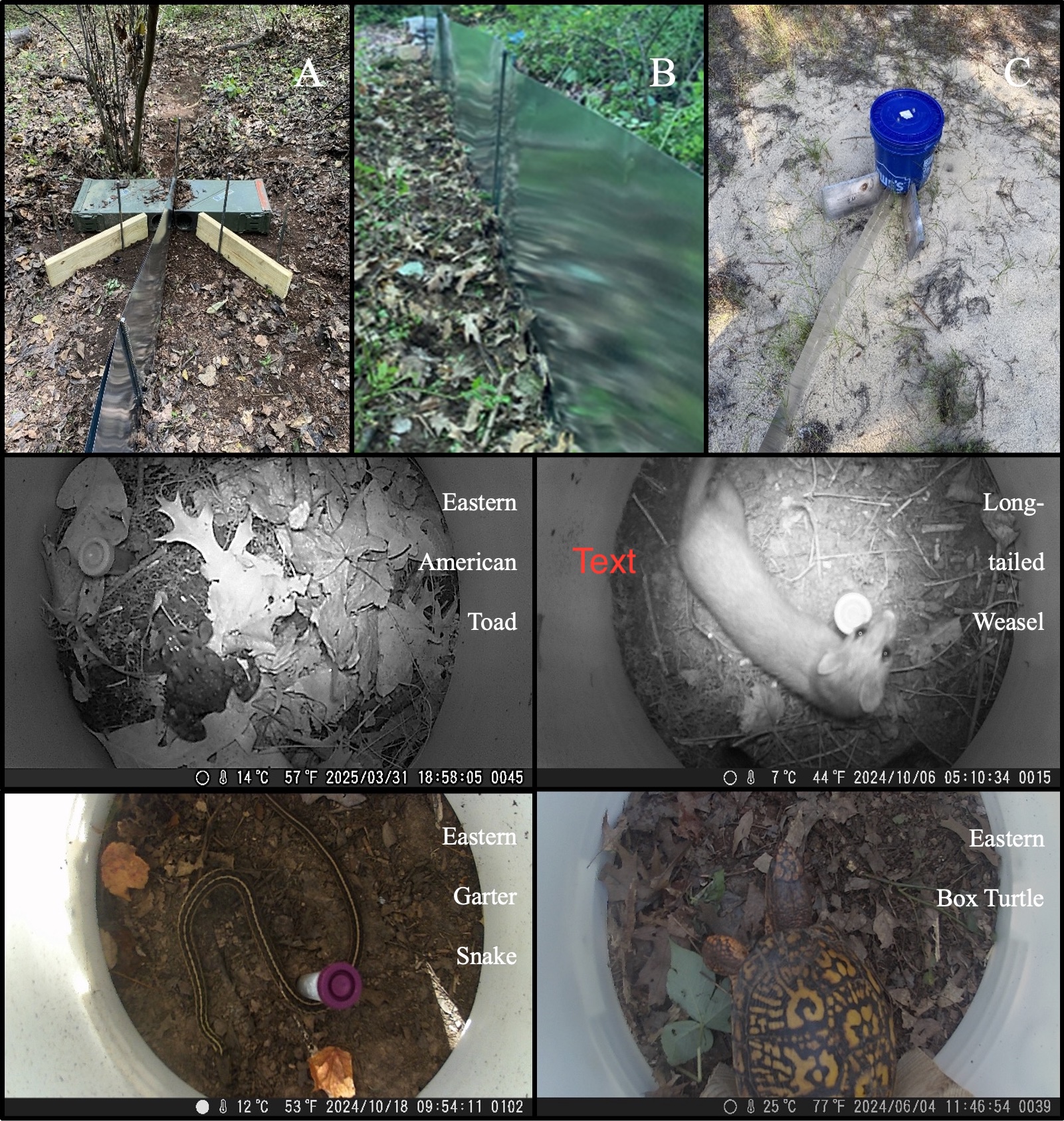
Millersville University, in cooperation with Shippensburg University, are continuing to use innovate remote camera trapping techniques with modifications of the Adapted Hunt Drift Fence Technique – AHDriFT for short, at the Assateague Island Hook, VA, and the Millersville University Biological Preserve, PA. The standard AHDriFT is composed of a sheet metal fence that is mounted flush to the soil, guiding small mammals and herpetofauna towards non-lethal Hunt camera traps at both ends. Image “A” below depicts the Mostela camera traps in conjunction with the drift fence seen in “B.” Image “C” depicts the Hunt trap that is used in unison with the Mostela trap on the opposing end of the drift fence. The goal of this study is to utilize Mostela camera traps in conjunction with Hunt camera traps within the AHDriFT system to determine the optimal camera trap type for small mammals and herpetofauna.
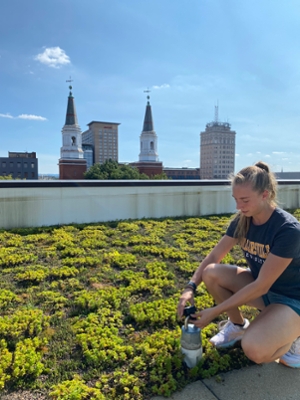
The goal of this research is to determine what urban habitat and weather features promote greater bat activity and diversity to guide bat conservation efforts in urban areas. We placed AudioMoth® recording devices on green roofs and conventional roofs in Lancaster City, PA to record bat vocalizations. We used the Sonobat software program to analyze bat call vocalizations and identify species. Tentative results suggest that weather impacts bat activity greather thatn ecological variables.
Surveying for Rare Bats in Protected Areas of Pennsylvania
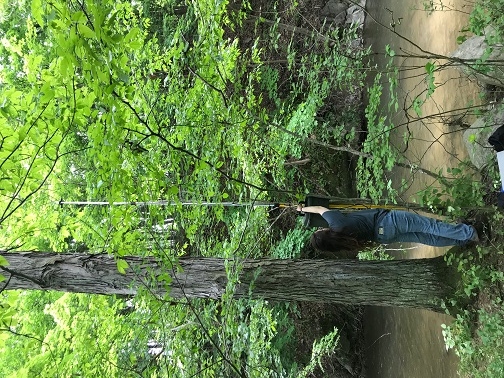
The state of Pennsylvania identifies 3 bat species as endangered, and 2 bat species in Pennsylvania are currently federally listed under the Endangered Species Act. The objective of this research project is to monitor for rare bat species in protected and urban areas in Pennsylvania via acoustic monitoring technology. All analyzed bat survey call data will be combined with other funded bat surveys efforts to contribute to Pennsylvania bat conservation efforts.